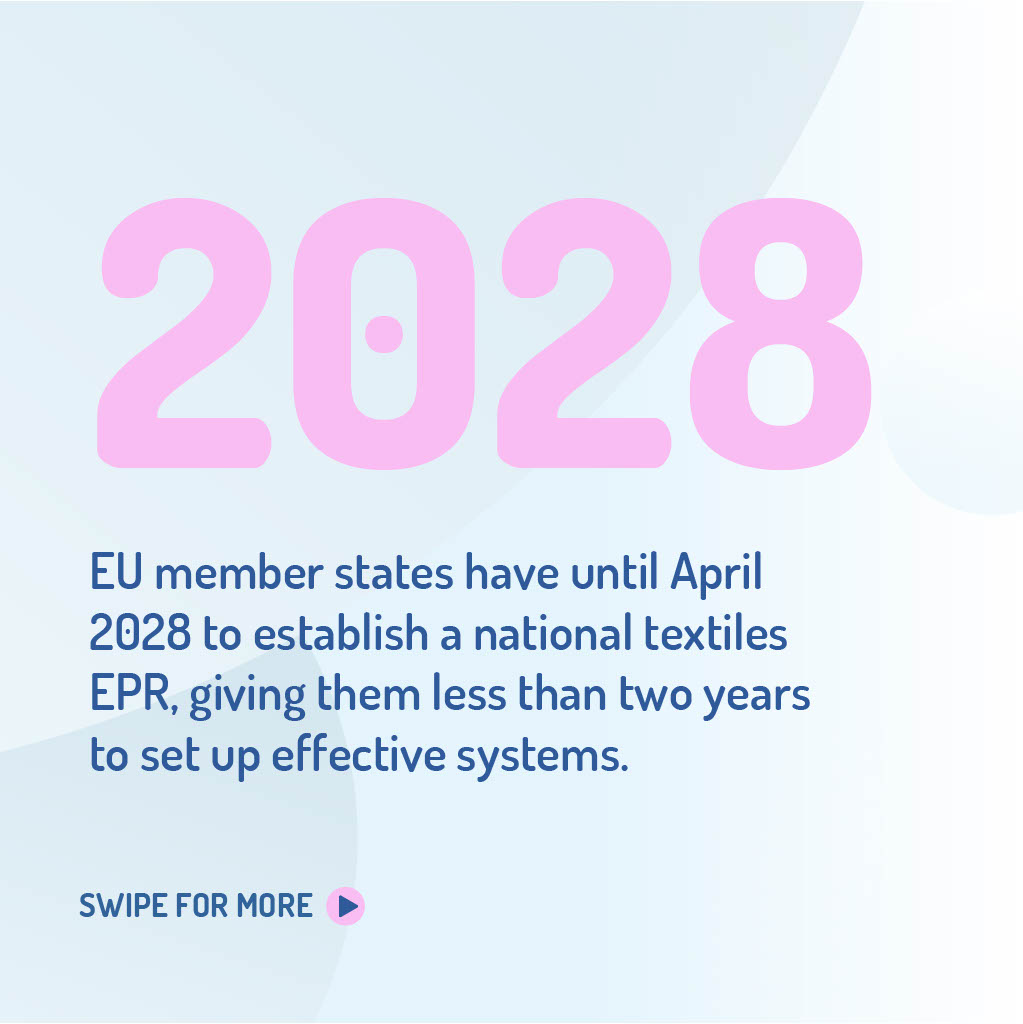

This week, the guide “How to design and develop EPR for textiles in the EU?” was presented. It is a new guide aimed at EU Member States to support the drafting of national legislation on Extended Producer Responsibility (EPR) in the textile sector. Following the recent revision of the Waste Framework Directive through Directive (EU) 2025/1892, all Member States are required to establish EPR schemes for textile and footwear products within less than two years—a tight timeframe to design effective systems adapted to each national context.
The report, prepared by Fundació ENT for Zero Waste Europe (ZWE), examines the key priorities policymakers should consider when designing these schemes. It also provides clear recommendations to ensure a strong and ambitious implementation of textile EPR across Europe.
The new schemes must ensure that producers assume financial responsibility—and, where appropriate, organisational responsibility—for the end-of-life management of textile products. In this regard, the guide offers practical guidance to help European countries develop efficient systems aligned with circular economy principles.
Among the key recommendations, the guide highlights the need to:
- Clearly define the scope of products and the responsibilities of all stakeholders involved
- Prioritise reuse and repair over other waste management options
- Ensure the inclusion and protection of social economy actors
- Cover all costs associated with textile waste management through EPR schemes
- Establish robust monitoring and data reporting systems, including sanctions for non-compliance
This publication aims to support Member States and stakeholders in meeting a new EU obligation that will transform the textile sector in the coming years, reinforcing Fundació ENT’s role as a key reference in the development of advanced environmental policies.
📄 Executive summary and full report available in English.