
Verónica Martínez | ENT environment & management
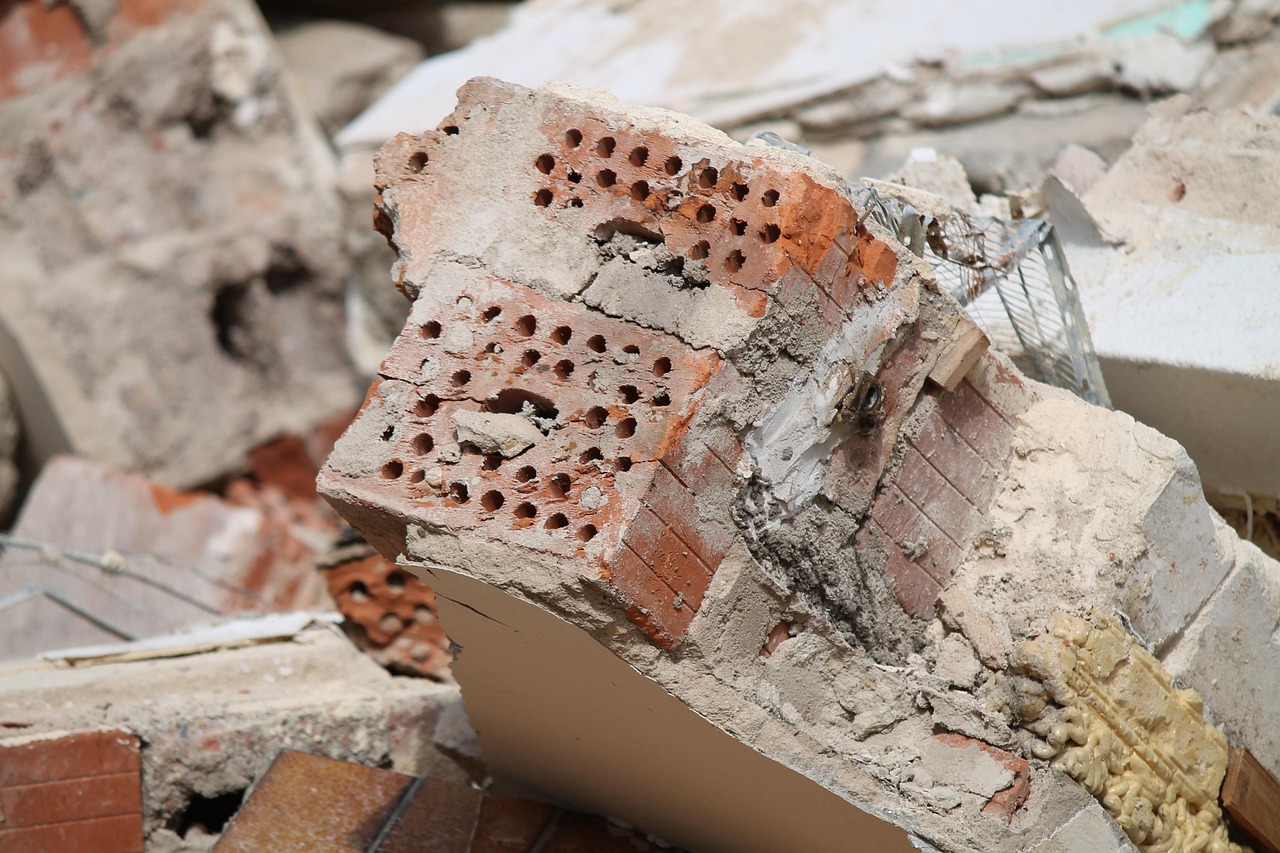
The building sector is one of the biggest sources of waste in Europe. In 2022, it generated 38.4% of the total waste across all economic activities and households, equivalent to 885.3 million tonnes (Eurostat, 2024). Although data on the quantity and composition of construction and demolition waste (C&DW) remains highly limited (primarily due to inconsistencies in definitions and reporting practices across EU Member States, and varying levels of regulatory oversight (Ecorys & CRI, 2014)), the Joint Research Centre (JRC) has recently provided an overview of the large variations on C&DW composition across EU mainly due to different building traditions and demolition techniques (Cristóbal García et al., 2024; Damgaard et al., 2022).
Article 11.2.b of the European Waste Directive stipulates that at least 70% of non-hazardous construction and demolition waste needs to be recovered starting in 2020[1]. Most EU Member States are on track to meet or have already exceeded the 70% recovery target set for 2020 (Cristóbal García et al., 2024). Although recovery rates for C&DW may appear relatively high, they are often achieved through practices such as backfilling and low-grade recovery, with only a small portion of the recovered material is reintegrated into buildings (EEA, 2020).
The circular material use rate in the EU in 2023 was 11.8%, i.e. recycled material accounted for 11.8% of material used. This percentage has only increased by 1.1% since 2010. This slow progress, along with projected increased material demand by 2030, implies that the EU is not currently on track to double the circular material use rate by 2030 (EEA, 2024). It should be noted that this indicator does not exclusively represent C&DW, but in the absence of more specific statistics for the building sector, it can be considered a useful proxy.
According to EEA (2020), a key obstacle for adopting CE practices in the building sector is the price competitiveness of virgin materials, which are often more affordable than secondary alternatives due to lower processing costs and non-accounted externalities. Another major challenge is the lack of trust in the quality and traceability of secondary materials, as stakeholders tend to favour virgin resources supported by warranties and standards. Furthermore, the presence of hazardous substances in waste streams complicates recycling processes and increases treatment costs. Circularity is also hindered by limited data on material composition, particularly in older buildings. Finally, the long lifespan of buildings can delay the perceived benefits of CE actions, discouraging stakeholders from investing. Finamore & Oltean-Dumbrava (2025) includes also weak cross-sector collaboration among the CE barriers in the building sector.
In the transition towards a more circular economy, it is essential to consider both the past and future of the building sector. Existing buildings represent vast material stocks with significant potential for urban mining[2], and forestry (as wooden resources are present as well). Recovering and reusing materials from the built environment that would otherwise become waste offers a key opportunity. At the same time, future buildings must be designed with circularity in mind, integrating principles such as design for disassembly, phasing out the use of hazardous substances in new construction, adaptive reuse, etc. Projects such as the Woodcircles work on both dimensions by exploring ways to unlock the circular potential of urban forests —reintegrating reclaimed wood into construction value chains— while also developing circular design strategies for future buildings.
The existing built environment—i.e., buildings and infrastructure that, in most cases, were not designed with circular practices in mind—could be seen as urban mines (and forests) containing valuable resources. If properly recovered, these materials could be incorporated into new buildings, reducing the need for extracting primary raw materials. Achieving this requires measures on both the supply and demand sides.
On the supply side, it is important that the demolition phase aims at recovering as much value as possible from the buildings. This initial phase is fundamental for the proper use of the recovered materials. If this phase is done with conventional mechanical demolition not properly planned and executed, the C&DW will be highly heterogeneous, and its recovery will only lead to low-value applications or simply be landfilled. Alternatively, selective demolition and deconstruction practices enable the separation and preservation of usable materials. Tools like pre-demolition audits and material passports can improve transparency and resource planning (EEA, 2020). When a building is deconstructed, it becomes a mine: a rich source of secondary materials that can be fed back into construction supply chains (JRC, 2024).
Despite its potential benefits, deconstruction remains the exception rather than the norm in most countries, largely due to structural barriers. Traditional demolition is typically faster and cheaper, whereas deconstruction is more time-consuming and often carries higher upfront costs. This is where policy could —and should— play a transformative role. Appropriately calibrated disposal fees can shift the economic balance in favour of deconstruction. For instance, if landfilling mixed construction and demolition (C&D) waste were significantly more expensive than sorting and recovering materials, contractors and demolishers would have a tangible financial incentive to adopt more circular practices. Disposal fees should reflect the true environmental cost of wasting materials.
Disposal fees could be tiered —higher for mixed waste and lower for separated waste streams to incentivize source separation of C&DW. They should also be higher for waste with viable recycling options, since diverting such materials from landfills is both feasible and environmentally beneficial. Additionally, disposal fees should differentiate between decontaminated and contaminated C&DW, penalizing the contaminated one. These fees could help offset the investments required for decontamination technologies.
Proper disposal fees paired with incentives for material recovery and reuse, would make urban mining and forestry not just an ethical or environmental choice, but an economic one. Additionally, while conventional demolition relies heavily on machinery, deconstruction is more labour-intensive (Coelho & De Brito, 2011), which could be advantageous in contexts where strengthening the local economy is a priority for public procurement strategies.
On the demand side, developing a well-functioning market for secondary construction materials is vital to giving recovered materials a second life. Governments can help by including minimum targets of reused and recycled materials into public procurement policies to increase further the demand of secondary products. Public procurement accounts for 14% of the EU’s gross domestic product (European Court of Auditors, 2023), so any initiative through the inclusion of environmental clauses in public contracts will be a crucial advance (RETEMA, 2024).
Taxing the use of virgin raw materials as done in several countries (OECD, 2023, 2024) or even establishing an EU-wide raw material tax as proposed by Green Transition Denmark (2024) could also help reducing the price gap between primary and secondary materials. In addition, there could be VAT reduction on secondary raw materials to make them more competitive.
The EU regulation could also help creating a demand for secondary raw materials in the building sector, as done for other waste streams such as target use of recycled PET in bottles from 2025 and recycled plastic in plastic bottles from 2030 in the Single Use Plastic Directive. Some European Regions have such target by law for some building materials. For example, the Catalan Government in 2021 established the obligation to use at least 5% of recycled aggregates from C&DW in public and private construction works (Catalan Government, 2023), but the consumption of recycled aggregates does not seem to take off in Catalonia due to a lack of law enforcement (EFE Verde, 2025).
Hopefully, the implementation of the Delegated Regulation (EU) 2023/2486[3], which supplements the EU Taxonomy Regulation, will help establish demand for secondary materials in the building sector. Annex II Section 3.1.4 states that for new buildings to be qualified as contributing to the transition to a circular economy, they must minimize the use of primary raw materials by incorporating secondary raw materials, and it sets limits on the amounts of primary materials allowed. Annex II. Section 3.2.5 establishes similar criteria for the renovation of existing buildings.
Apart from economic and regulatory instruments mentioned above to increase the demand of secondary materials, the establishment of certification systems and quality standards for recycled materials is crucial to address lack of trust in the quality and traceability of secondary materials (EEA, 2020). Establishing end-of-waste criteria and assigning responsibilities for end-of-life management are essential, along with providing clear definitions for repair, refurbish, repurpose, remanufacture, and reuse to support informed decision-making (JRC, 2024).
Beyond waste reduction, urban mining and forestry directly contributes to climate goals. Reusing structural steel or reclaimed wood avoids the emissions associated with producing these materials from virgin sources. Embracing circularity in construction offers a practical path toward lower-carbon cities.
REFERENCES
Catalan Government. (2023). ORDRE ACC/9/2023, de 23 de gener, per la qual es regula la utilització dels àrids reciclats procedents de la valorització de residus de la construcció i demolició. https://www.gencat.cat/dogc
Coelho, A., & De Brito, J. (2011). Economic analysis of conventional versus selective demolition – A case study. Resources, Conservation and Recycling, 55(3), 382–392. https://doi.org/10.1016/j.resconrec.2010.11.003
Cristóbal García, J., Caro, D., Foster, G., Pristerà, G., Gallo, F., & Tonini, D. (2024). Techno-economic and environmental assessment of construction and demolition waste management in the European Union Status quo and prospective potential. https://doi.org/10.2760/721895
Damgaard, A., Lodato, C., Butera, S., Fruergaard, T. A., Kamps, M., Corbin, L., Tonini, D., & Astrup, T. F. (2022). Background data collection and life cycle assessment for construction and demolition waste (CDW) management. https://doi.org/10.2760/772724
Ecorys, & CRI. (2014). Resource efficiency in the building sector. Final report. Client: DG Environment. https://trinomics.eu/resource-efficiency-opportunities-in-the-building-sector/?aid=1013&sa=0
EEA. (2020). Construction and demolition waste: challenges and opportunities in a circular economy. Briefing no. 14/2019.
EEA. (2024). How far is Europe from reaching its ambition to double the circular use of materials? Briefing no. 08/2023. https://doi.org/10.2800/599752
EFE Verde. (2025). Ningún residuo de la construcción debe acabar en un vertedero. Miguel Ángel Pérez Peñalva (Gerente HERCAL).
European Court of Auditors. (2023). Special report 28/2023: Public procurement in the EU. Less competition for contracts awarded for works, goods and services in the 10 years up to 2021. https://www.eca.europa.eu/en/publications/SR-2023-28
Eurostat. (2024). Waste Statistics. Eurostat. https://ec.europa.eu/eurostat/statistics-explained/index.php?title=Waste_statistics#Data_sources
Finamore, M., & Oltean-Dumbrava, C. (2025). Emerging Trends in the Circular Economy: Multidimensional Perspective in the Building Sector. In Circular Economy and Sustainability. Springer Nature. https://doi.org/10.1007/s43615-024-00485-0
Green Transition Denmark. (2024). CIRCULAR CONSTRUCTION: FROM DREAM TO POLITICAL PRACTICE IN EU. www.rgo.dk/en/
JRC. (2024). Circular Technologies in Construction. Putting Science Into Standards. https://doi.org/10.2760/876431
OECD. (2023). Environmental Tax Policy Review of Andalusia. https://doi.org/10.1787/fe6d8b45-en
OECD. (2024). Economic Instruments for the Circular Economy in Italy. OECD Publishing.
RETEMA. (2024). Áridos reciclados. Pilar de la construcción sostenible. https://www.retema.es/articulos-reportajes/aridos-reciclados-pilar-de-la-construccion-sostenible
—
[1] “by 2020, the preparing for re-use, recycling and other material recovery, including backfilling operations using waste to substitute other materials, of non-hazardous construction and demolition
waste excluding naturally occurring material defined in category 17 05 04 in the list of waste shall be increased to a minimum of 70 % by weight”
[2] Urban mining from the built environment involves extracting valuable materials (such as concrete, bricks, steel, copper, etc) from existing structures and infrastructure, such as buildings, when they become C&DW.
[3] Delegated Regulation (EU) 2023/2486 of 27 June 2023 supplementing Regulation (EU) 2020/852 of the European Parliament and of the Council by establishing the technical screening criteria for determining the conditions under which an economic activity qualifies as contributing substantially to the sustainable use and protection of water and marine resources, to the transition to a circular economy, to pollution prevention and control, or to the protection and restoration of biodiversity and ecosystems and for determining whether that economic activity causes no significant harm to any of the other environmental objectives and amending Commission Delegated Regulation (EU) 2021/2178 as regards specific public disclosures for those economic activities