
Diana Reinoso Botsho | Fundació ENT | Leader of the work package on value chain development, social aspects and public policy in the ReWoW (Revolutionising the Waste of Waste) project
Over the last decades, significant efforts are being made to develop innovative solutions capable of reducing our dependence on fossil resources, advancing towards strategic autonomy and increasing Europe’s competitiveness. However, experience shows that bringing these innovations to market remains a major challenge (1), as technological development alone is not enough without favourable industrial, regulatory and societal conditions.
Bio-based products must compete with well-established alternatives that have benefited from decades of optimisation, proven performance, mature supply chains, economies of scale and consumer acceptance. By contrast, introducing a new bio-based product or ingredient creates different uncertainties and risks for actors across the value chain. Identifying and addressing them from the outset can help shape new bio-based value chains and prevent problems at later stages of development and scale-up.
The uncertainties surrounding new bio-based products extend across the entire value chain, and their nature and relative importance cannot be fully anticipated. Depending on the product and value chain, industrial actors may place greater or lesser emphasis on performance, supply reliability, compliance costs, consumer’s willingness to pay or potential reputational risks. Regulators may prioritise different safety, quality and environmental considerations depending on the material and its intended application. Likewise, consumers’ concerns may vary according to the product category: its ability to meet their needs, the use of unfamiliar ingredients or production processes, the credibility of environmental claims, or the justification of any additional cost. Moreover, these considerations are closely interconnected: regulatory clarity can influence industrial investment, industry practices can shape consumer confidence, and public acceptance can ultimately affect both market decisions and future regulation.
This complex network of interdependent factors highlights an important reality: even technically successful innovations may struggle to achieve widespread adoption if they fail to align with the needs and expectations of the wider system in which they are expected to operate (2).
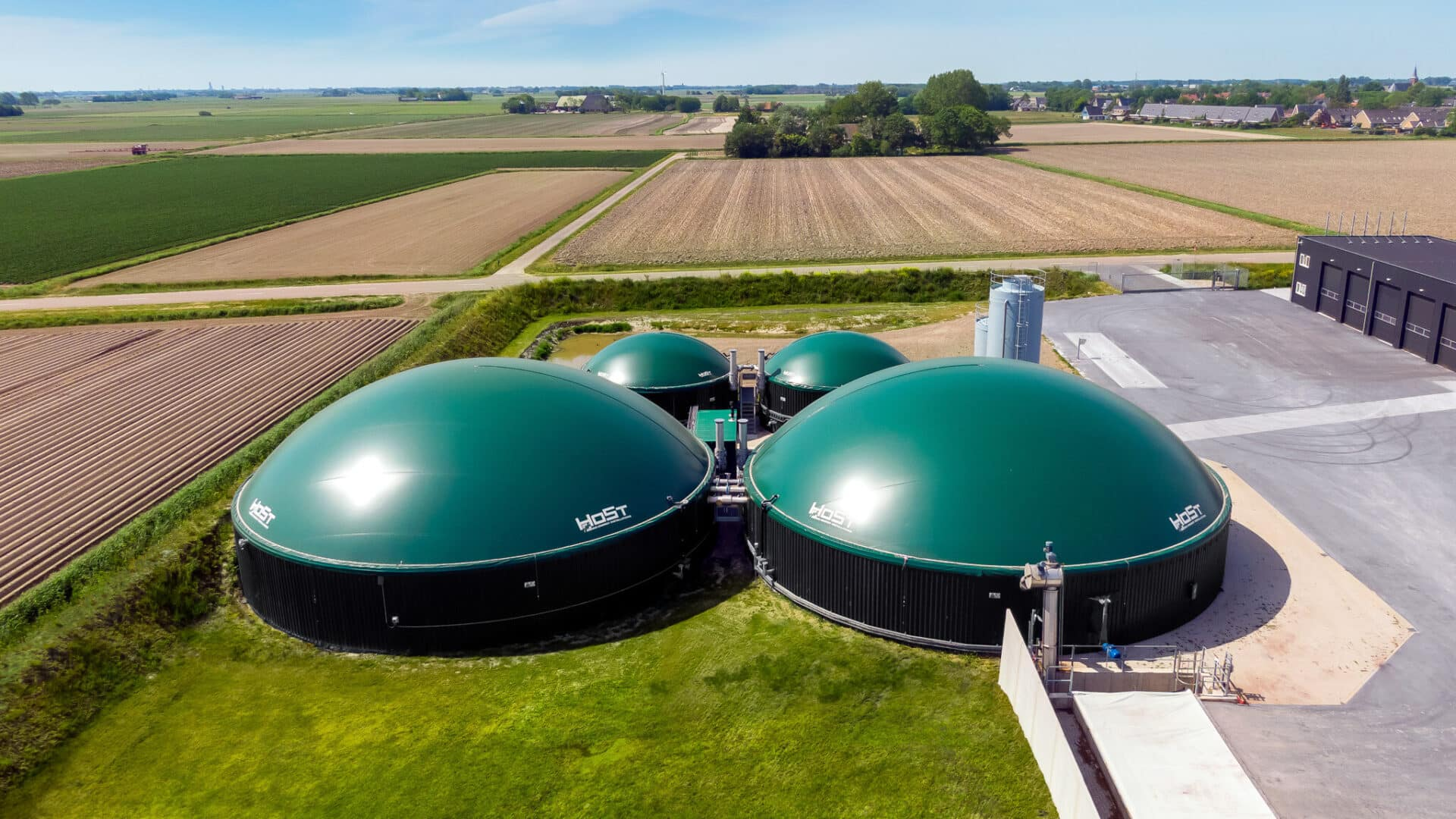
Digestate provides a particularly interesting challenge in this matter. Digestate is the nutrient-rich co-product generated during the anaerobic digestion of organic matter, that is currently being used as an organic fertiliser and soil amendment. However, agriculture alone may not be able to absorb the increasing volumes of digestate expected in the coming years as a result of the European Union’s efforts to expand biogas and biomethane production through initiatives such as the REPowerEU Plan (3) that aims to increase Europe’s energy independence and circular economy. Therefore, finding new and higher-value applications for digestate is becoming increasingly important (4). Yet identifying promising applications is only part of the challenge; understanding the conditions under which they can be successfully adopted is equally important, particularly when dealing with such a diverse and potentially controversial organic material.
Integrating this systemic perspective (5) from the outset is precisely the approach adopted by ReWoW. Funded through the EIC Pathfinder programme (Horizon Europe), and led by the Bioconversion of Organic Wastes and New Materials Research Group at the Autonomous University of Barcelona, the project seeks to transform digestate into three innovative bio-based product families: biosurfactants, aroma compounds and enhanced soil amendments. These could have applications in sectors as diverse as detergents, cosmetics, agriculture, urban greening and, potentially, feed and food.
To understand the opportunities and challenges associated with these applications, ReWoW engages stakeholders across the entire value chain, from biogas and biomethane producers to industrial users, regulators, retailers and consumers. This broad engagement is particularly important because the project explores several value chains with very different technical requirements, market structures, regulatory contexts and consumer expectations.
Through this dialogue we will analyse how different actors of the system interact, what incentives drive decision-making, what are the perceived risks, which elements could potentially generate reliability, where barriers emerge and what conditions could facilitate adoption. The objective is to translate practical knowledge from across the value chain into evidence that can support technological development, market strategies and future policy recommendations.
By the end of ReWoW, we hope to have developed a clearer and more realistic picture of where these new bio-based products could create value, what may prevent their adoption and how the main barriers could be overcome. This knowledge should be useful not only for ReWoW, but also for other circular bioeconomy initiatives seeking to move promising solutions from the laboratory into viable value chains and real-world applications.
References
(1) Circular Bio-based Europe Joint Undertaking. (2026). CBE JU Stakeholder Forum 2026: Final report. European Union. https://www.cbe.europa.eu/system/files/2026-05/CBESF26-final%20report.pdf
(2) Geels, F. W. (2004). From sectoral systems of innovation to socio-technical systems: Insights about dynamics and change from sociology and institutional theory. Research Policy, 33(6-7), 897-920. https://doi.org/10.1016/j.respol.2004.01.015
(3) European Commission. (2022, May 18). REPowerEU plan (COM(2022) 230 final). https://eur-lex.europa.eu/legal-content/EN/TXT/?uri=CELEX:52022DC0230
(4) European Biogas Association. (2026). Digestate in Europe: The state of play in 2026. https://www.europeanbiogas.eu/wp-content/uploads/2026/05/Brochure-Digestrate-2026_FINAL-1-1.pdf
(5) Meadows, D. H. (2008). Thinking in systems: A primer. Chelsea Green Publishing.