
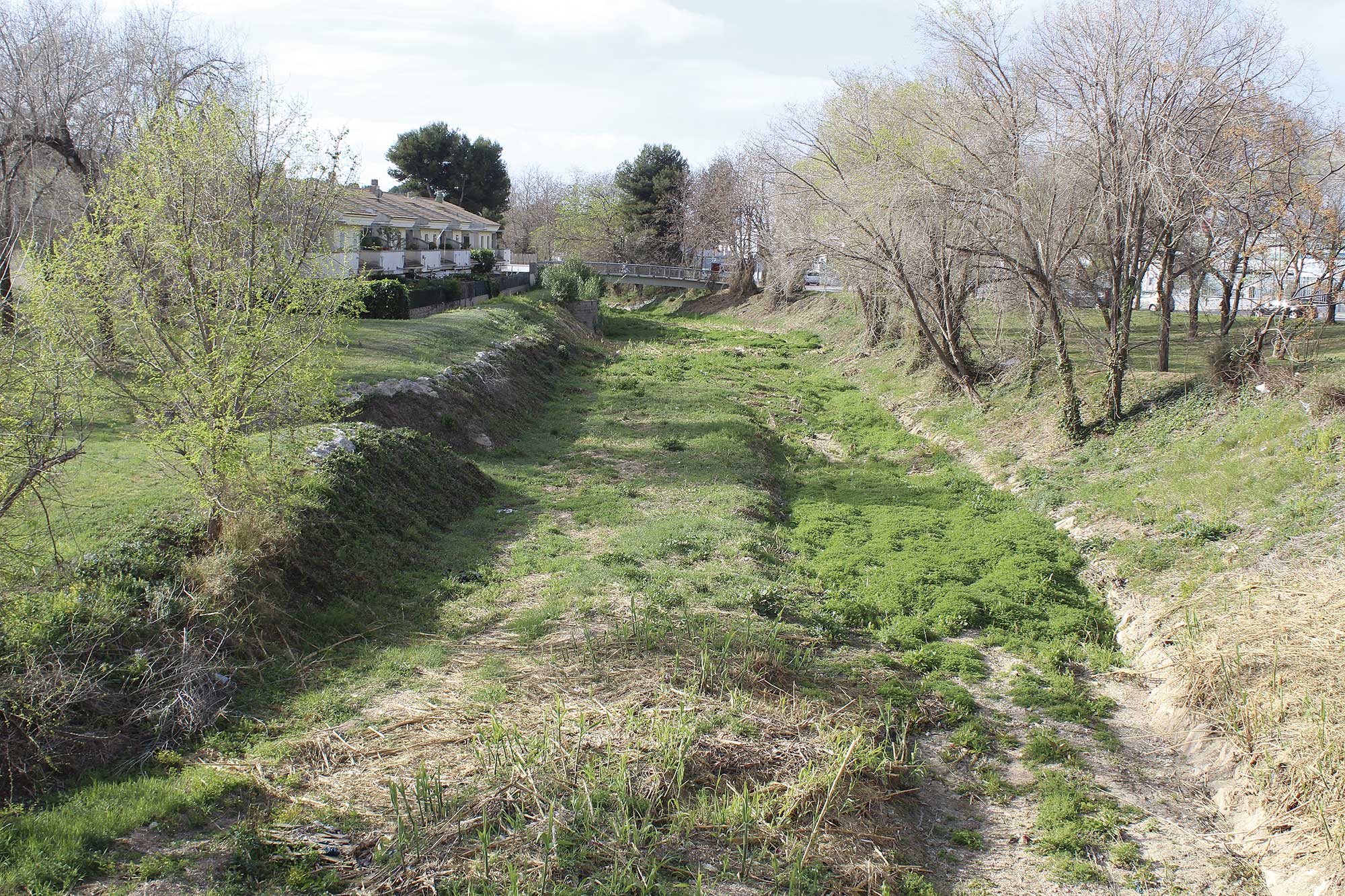
Urban rivers play an important role in managing flood risks from intense precipitation events, which are expected to increase with climate change. This study evaluates the effectiveness of a green-grey approach to flooding in Vilanova i la Geltrú, Spain. The analysis focuses on hydromorphological adjustments of the temporary stream Torrent de la Piera, primarily aimed at enhancing its natural flood conveyance capacity and reducing overflow along its margins. During past periods of intense rainfall, this stream has overflowed, flooding adjacent roads and sidewalks and disrupting traffic and pedestrian access. An ex-ante cost-benefit analysis (CBA) is applied to assess proposed adaptation measures, including raising the right riverbank with an earthen levee and widening the riverbed at select cross-sections. The analysis compares implementation and maintenance costs with the benefits of reduced flood damage to residential and commercial buildings and infrastructure, based on an initial flood risk assessment under RCP4.5 and RCP8.5 climate scenarios for the period 2024–2065. Results indicate the potential of the proposed interventions to significantly reduce flood exposure and associated economic losses. This study emphasizes the importance of a hybrid adaptation approach, considering co-benefits, local constraints, and resilience to extreme events to enhance flood protection, societal acceptance, and economic efficiency.
Luís Campos | Mar Riera
2026
Critical Insights in Climate Change
Campos Rodrigues, L., Riera-Spiegelhalder, M., Navarro, F., Mocali, R., Brandini, C., Bendoni, M., Caparrini, F., Figueiredo, R., Rangel, R., Ceresa, P., Jorda-Capdevila, D. (2026). Hybrid adaptation to urban riverine floods: a cost-benefit analysis in Vilanova i la Geltrú (Spain). Critical Insights in Climate Change, 2(1). https://doi.org/10.1080/29931495.2025.2590372