
Luís Campos Rodrigues | ENT environment & management
Just a few weeks ago, we looked ahead to COP30 with a mixture of concern and (very) cautious optimism, noting persistent gaps in actual emissions and required reductions, Nationally Determined Contributions (NDC) submissions, adaptation finance, social justice commitments, and more [1]. Climate change — one of the most complex challenges of our time, if not the most — still demands an urgent, systemic response. The transformations required are vast: in our energy systems, economies, consumption patterns, and beyond. Quite an overwhelming challenge, indeed. Still, inaction is not an option.
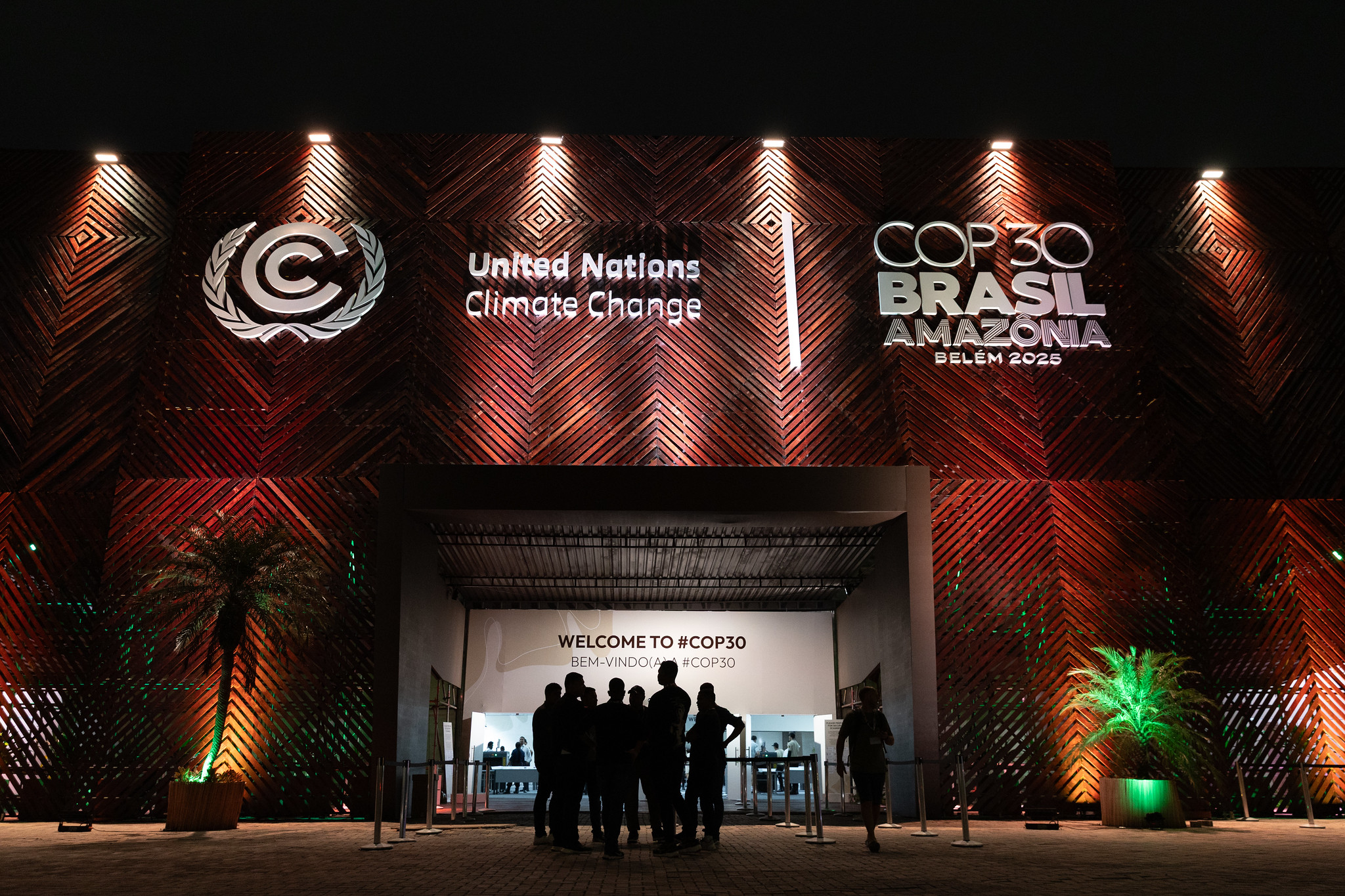
With that in mind, here is a look at some of the main outcomes of COP30, held this November in Belém, Brazil.
- Global cooperation and multilateralism
COP30 managed to hold the multilateral process together despite the ongoing global geopolitical turmoil. The Action Agenda emphasized implementation and reaffirmed the Paris Agreement as a common reference point [2]. Yet the unity was thin, with the final compromise described as the “lowest common denominator,” far from meeting science-based goals [3, 4].
- Mitigation and fossil fuels
The summit introduced two voluntary initiatives, the Belém Mission to 1.5°C and the Global Implementation Accelerator (GIA), aimed at boosting action [2, 4]. However, COP30’s most notable omission in the final text was the lack of any reference to fossil fuels, as well as a clear pathway for their phase-out— a major gap considering their central role in global emissions [4, 5, 6].
- Adaptation, resilience and finance
The conference made some advances on adaptation, including the adoption of 59 indicators under the Global Goal on Adaptation and a political push to increase adaptation finance by 2035 [4, 6]. COP30 also highlighted the contributions of subnational actors — cities, businesses, financial institutions, and civil society — in supporting climate action alongside national governments [2]. The promoted “global mutirão” (a Brazilian term for collective effort) emphasized cooperation across all parts of society [4, 7]. However, the commitments remain voluntary, with no binding roadmap or guaranteed funding, and much of the progress depends on voluntary action, risking fragmented results. Moreover, progress on adaptation and loss-and-damage finance remained insufficient to meet the needs of vulnerable communities [3, 8, 9].
- Justice and inclusion
The final text includes references to just transition, labour rights, and community participation [4]. Civil society described parts of the text as a “hopeful step towards justice” while noting that commitments are non-binding and still insufficient to protect communities most affected by climate change, including idigenous communities [9].
Coping forward
There are moments in life when one must try to find the positive side even amid outcomes that can feel, at times, discouraging. The title of this article plays with “COP30” and “cope”: the idea of carrying on, not giving up. “Hope” could work too, but the wordplay would be lost. In the end, COP30 delivered neither a breakthrough (which we urgently need!) nor a collapse — something in between. Looking ahead, COP31 is now expected to take place in Turkey in 2026.
On a final note, for a more optimistic view on climate action, I plan to give Hannah Ritchie’s new book “Clearing the Air” a read this Christmas. It explores how existing tools and solutions can help tackle climate change [10].
—
[1] https://ent.cat/en/will-climate-change-in-cop30/. [2] https://unfccc.int/sites/default/files/resource/COP30%20Action%20Agenda_Final%20Report.docx.pdf. [3] https://www.europarl.europa.eu/news/en/press-room/20251117IPR31438/cop30-outcome-slow-progress-but-insufficient-to-meet-climate-crisis-urgency. [4] https://www.carbonbrief.org/cop30-key-outcomes-agreed-at-the-un-climate-talks-in-belem/. [5] https://www.theguardian.com/environment/2025/nov/23/un-warns-world-losing-climate-battle-but-fragile-cop30-deal-keeps-up-the-fight. [6] https://www.euronews.com/my-europe/2025/11/24/cop30-fails-to-set-fossil-fuels-end-and-sheds-light-on-cracked-international-order. [7] https://unfccc.int/sites/default/files/resource/cma2025_L24_adv.pdf. [8] https://climatenetwork.org/2025/11/21/reaction-to-latest-draft-cop30-text-launch-the-bam-fund-adaptation-and-commit-to-justice/. [9] https://climatenetwork.org/2025/11/22/cop30-takes-a-hopeful-step-towards-justice-but-does-not-go-far-enough/. [10] https://ourworldindata.org/hannah-ritchie-new-book.