
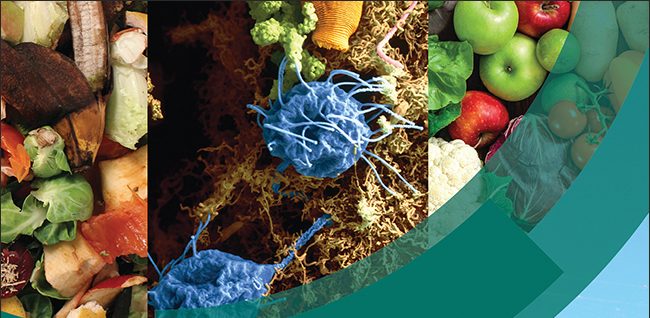
Se acaba de publicar el libro «Composting: Fundamentals and Recent Advances», que quiere convertirse en un recurso tanto para estudiantes como para investigadores interesados en la gestión de residuos orgánicos, la sostenibilidad o la economía circular. El libro cuenta con un capítulo de los miembros de ENT Gemma Nohales e Ignasi Puig. Su capítulo (14) se titula «Modelos of Separate Collection for High Quality Composting» y se centra en modelos de recogida eficientes e instrumentos complementarios, incluyendo los económicos.
Seguidamente, les adjuntamos el abstract del capítulo:
Collecting high quantity and quality bio-waste for biological recycling is a necessary condition to promote the appropriate functioning of treatment processes, optimize costs and obtain a quality compost that can be returned to the soil closing the organic matter cycle and taking advantage of all the related benefits. This can be achieved by introducing efficient bio-waste collection models that are adapted to the needs of each context. Individualized collection models with user identification systems, such as door-to-door collection, ensure high per capita collection rates and low impurity levels. Beyond technical elements and system configuration, bio-waste management depends on other complementary instruments such as environmental education and communication (including the provision of the necessary materials to participate), legal and regulatory, and organizational and monitoring (user and service performance) as well as data management. Economic and fiscal instruments are crucial to incentivise local entities and operators to improve waste management and bio-waste producers to promote behaviour change regarding bio-waste source separation. Landfill and incineration taxes, pay-as-you-throw waste charges, and other economic instruments can play an important role.